


4K Computer Monitor Guide: How to Choose the Right Display for Your Needs
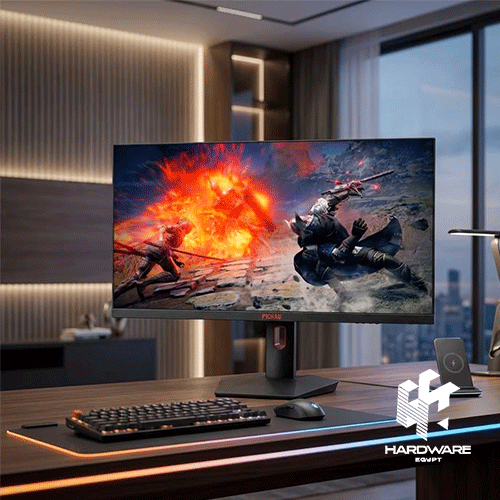
Buying a monitor sounds simple until you actually start comparing options.
At first, the choice seems easy: pick the biggest screen with the highest resolution. Then you look more closely and discover many other decisions to make.
Should you choose a 27-inch or 32-inch screen?
Is 4K really necessary for your work?
Do you need a high refresh rate?
Will your computer actually handle the resolution?
These questions matter because the monitor is the part of your setup that you look at every day.
A powerful computer with a poor display can still feel frustrating to use.
This is why choosing the right 4k computer monitor is not just about buying more pixels. It is about finding a screen that matches your actual needs.
A 4K ultra HD computer monitor can improve your experience with sharper text, more workspace, and better image detail. But the best choice depends on how you use your computer.
A graphic designer, gamer, programmer, and office employee may all need different things from the same type of display.
Before choosing a monitor, think about:
- What will you use it for?
- How many hours will you spend in front of it?
- Do you need accurate colors?
- Do you need fast response for gaming?
- How much desk space do you have?
The goal is not to buy the most expensive monitor.
The goal is to buy the one that makes your daily work or entertainment better.
What Is a 4K Computer Monitor and Why Does Resolution Matter?
A 4k computer monitor is a display that typically uses a resolution of 3840 × 2160 pixels, also known as 4K UHD.
To understand the difference, compare it with Full HD:
- Full HD: 1920 × 1080 pixels
- 4K UHD: 3840 × 2160 pixels
A 4K display contains around four times more pixels than Full HD, which creates a sharper image and allows more details to appear on screen.
You will notice the difference most when working with:
- Small text.
- High-resolution photos.
- Video editing.
- Detailed designs.
- Large spreadsheets.
For many users, the biggest advantage is not watching movies. It is productivity.
A higher-resolution display allows you to keep more information visible at the same time.
For example:
- A developer can view more code.
- A designer can keep more tools open.
- An analyst can work with larger spreadsheets.
- A content creator can edit detailed footage more comfortably.
However, resolution is only one part of monitor quality.
Two monitors can both be 4K and still feel completely different because of:
- Panel technology.
- Brightness.
- Color accuracy.
- Refresh rate.
- Connectivity options.
That is why choosing a monitor only because it says “4K” is not always the right approach.
Before comparing individual models, you can explore different computer monitors to understand how screen size, resolution, and features vary between options.
Is a 4K Ultra HD Computer Monitor Worth Buying?
A 4 K Ultra HD computer monitor can be a major upgrade, but the value depends on how you use your computer.
Some users will immediately notice the improvement. Others may not need the extra resolution.
The best way to decide is to look at your daily tasks.
4K Monitors for Office and Business Work
For office users, the biggest benefit is usually comfort.
Many professionals spend several hours every day reading:
- Documents.
- Emails.
- Reports.
- Presentations.
- Spreadsheets.
A sharper display can make text easier to read and reduce the need to constantly zoom or switch between windows.
A 4K monitor can also improve multitasking.
Instead of opening one application at a time, users can keep several windows visible together.
For businesses upgrading their workstations, reviewing different computer monitor solutions can help compare screen sizes and specifications before selecting the right setup.
4K Monitors for Designers and Content Creators
Creative professionals are among the users who usually benefit most from moving to 4K.
When working with images or videos, small details matter.
A good 4K display can help with:
Image Detail
Higher resolution makes it easier to inspect:
- Photos.
- Graphics.
- Video footage.
- Design elements.
More Workspace
Creative software often includes many panels and tools.
A larger high-resolution display reduces the need for constant scrolling and zooming.
Better Preview Quality
Video editors working with high-resolution content can view more details without reducing the preview size too much.
However, creators should not focus only on resolution.
Color accuracy, brightness, and panel quality can be equally important.
4K Monitors for Gaming
Gaming is one area where a 4K upgrade can create a noticeable visual difference.
Games appear sharper, especially on larger screens.
But there is an important point:
A 4K monitor does not automatically improve gaming performance.
Your computer hardware matters.
Before choosing a gaming-focused display, consider:
- Graphics card performance.
- Refresh rate.
- Response time.
- Adaptive sync support.
A powerful gaming PC may take advantage of a high-refresh 4K screen, while another system may struggle.
The monitor and the computer should always be considered as one setup
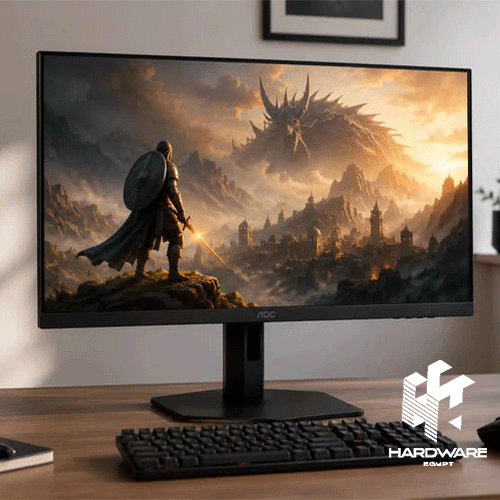
Choosing the Right 4K Computer Monitor Size
One of the hardest decisions when buying a monitor is choosing the correct size.
A bigger screen is not always better.
The right size depends on:
- Desk space.
- Viewing distance.
- Type of work.
- Number of applications you use.
- Personal preference.
| Monitor Size | Best For | Things to Consider |
|---|---|---|
| 27-inch 4K | Office work and design | Excellent sharpness but smaller workspace |
| 32-inch 4K | Professional work and multitasking | Balanced size and comfort |
| 43-inch 4K | Large productivity setups | Needs more desk space |
| 55 inch 4k computer monitor | Large workspaces and presentations | Requires proper viewing distance |
27-Inch 4K Monitors
A 27-inch 4K monitor is popular because it provides excellent pixel density.
It is suitable for:
- Programming.
- Office work.
- Design.
- Everyday productivity.
The main thing to consider is scaling.
Because everything appears sharper and more detailed, some users increase operating system scaling to make text and icons easier to read.
32-Inch 4K Monitors
For many professionals, 32 inches is the ideal balance.
It provides:
- More physical workspace.
- Comfortable viewing.
- Strong image clarity.
A 32-inch 4K display is commonly preferred by:
- Designers.
- Developers.
- Editors.
- Users who work with multiple applications.
43-Inch and 55-Inch 4K Computer Monitors: Who Needs a Larger Screen?
Moving from a 32-inch monitor to a larger display changes the entire experience.
A bigger screen can improve productivity, but it also requires more planning. The largest monitor is not always the most comfortable option, especially on a normal desk.
A 55 inch 4k computer monitor is usually not the first choice for a traditional workstation. It is more suitable for specific situations where a large viewing area creates a real advantage.
Examples include:
- Control rooms.
- Professional presentations.
- Creative studios.
- Large workspaces.
- Users who sit farther away from the screen.
The main benefit is the amount of information you can see at the same time.
A large 4K display allows you to:
- Compare documents side by side.
- Keep multiple applications open.
- View large dashboards.
- Work with editing timelines more comfortably.
However, a larger screen also creates new questions:
- Do you have enough desk space?
- Is the viewing distance comfortable?
- Will the screen dominate the entire workspace?
- Does your computer support the resolution properly?
A large monitor should make your workflow easier, not simply make your desk look more impressive.
4K vs Full HD vs QHD: Which Resolution Should You Choose?
Most buyers start their monitor search by comparing resolution.
It makes sense. Resolution is easy to understand and easy to compare.
But the highest number is not always the right choice.
The better question is:
Which resolution matches the way you actually use your computer?
| Resolution | Pixel Count | Best For | Main Advantage |
|---|---|---|---|
| Full HD | 1920 × 1080 | Basic work and everyday tasks | Affordable and easy to run |
| QHD | 2560 × 1440 | Gaming and professional use | Balance between quality and performance |
| 4K UHD | 3840 × 2160 | Design, editing, productivity | Maximum detail and workspace |
A 4k computer monitor provides the highest level of detail among these common options.
The difference becomes especially noticeable when:
- Reading small text.
- Working with images.
- Editing videos.
- Using large spreadsheets.
- Creating detailed designs.
However, higher resolution also requires stronger hardware.
A computer that handles Full HD gaming smoothly may struggle when running modern games at 4K resolution.
That is why choosing a monitor should always include looking at your graphics card, processor, and the applications you use.
Panel Types: IPS, VA, and OLED Explained
Resolution tells you how sharp the image looks.
The panel type affects how that image actually feels.
Two monitors can both be 4K and still provide very different experiences because of the technology behind the display.
IPS Panels
IPS panels are popular among professionals because they usually provide:
- Accurate colors.
- Wide viewing angles.
- Consistent image quality.
They are often preferred by:
- Designers.
- Photographers.
- Video editors.
- Content creators.
For creative work, a sharp image is useful, but accurate colors are what make the monitor truly practical.
VA Panels
VA panels usually focus more on contrast.
Their strengths include:
- Deeper blacks.
- Strong contrast.
- Good image quality for entertainment.
They can be suitable for:
- Watching movies.
- General use.
- Some gaming setups.
OLED technology works differently because every pixel can control its own light.
This allows OLED displays to provide:
- Excellent contrast.
- Very deep blacks.
- Strong image quality.
However, OLED monitors often come at a higher price and may require more consideration depending on how they will be used.
The best panel type depends on your priorities.
Refresh Rate and Response Time: Features Gamers Should Watch
Many buyers focus heavily on resolution and forget that other specifications affect the experience.
Refresh rate determines how often the screen updates the image every second.
Common refresh rates include:
- 60Hz.
- 75Hz.
- 120Hz.
- 144Hz.
- Higher rates for gaming displays.
For office work, a standard refresh rate is often enough.
For gaming, especially competitive gaming, refresh rate becomes much more important.
A gamer choosing a 4k computer monitor should consider:
- Refresh rate.
- Response time.
- Adaptive sync.
- Graphics card capability.
A high-refresh display only provides benefits if the computer can actually produce enough frames.
HDR and Color Accuracy: Important Details for Creators
HDR is another feature that appears frequently in monitor specifications.
High Dynamic Range improves the difference between bright and dark areas of an image.
This can improve:
- Video viewing.
- Gaming visuals.
- Photography.
- Creative projects.
However, not every monitor with HDR provides the same experience.
Before buying, look at:
- Brightness level.
- Color coverage.
- Panel quality.
- Calibration options.
A 4k ultra hd computer monitor can provide incredible detail, but professional users need more than sharpness.
They need a display that represents colors accurately.
Connectivity: What Ports Should a 4K Monitor Have?
A monitor is not only a display.
It is the connection point between your computer, laptop, and other devices.
Before buying, check which ports are available.
HDMI
HDMI is widely used with:
- Desktop computers.
- Laptops.
- Gaming consoles.
However, HDMI versions support different resolutions and refresh rates.
DisplayPort
DisplayPort is common in professional and gaming environments.
It is often preferred for:
- High refresh rates.
- High resolutions.
- Multi-monitor setups.
USB-C
USB-C has become increasingly useful, especially for laptop users.
Depending on the monitor, USB-C can provide:
- Video connection.
- Data transfer.
- Laptop charging.
For users building a complete workstation, choosing the right computer accessories can make the entire setup more practical and organized.
Choosing a 4K Computer Monitor for Gaming
Gaming is one of the areas where choosing a monitor requires careful planning.
A beautiful 4K image does not automatically mean a better gaming experience.
The complete setup matters.
Graphics Card Requirements
Running games at 4K requires more graphics power than lower resolutions.
Before buying a 4K gaming monitor, check:
- Your graphics card.
- Target frame rate.
- Game settings.
- Future upgrade plans.
A monitor can display 4K, but the computer needs to generate the performance.
Refresh Rate and Gaming Smoothness
Gamers often prioritize:
- 120Hz or higher refresh rates.
- Low response time.
- Adaptive sync.
These features help create a smoother experience, especially in fast-paced games.
Users comparing gaming displays can explore different gaming monitors to compare refresh rates, response times, and gaming-focused features.
Choosing the Right Gaming Size
A larger screen can create a more immersive experience.
But bigger is not always better.
A 32-inch 4K display may feel perfect on a desk, while a larger screen may require more distance.
The best size depends on your setup.
Choosing a 4K Monitor for Professional Work
A monitor used for professional work should be chosen based on the tasks you perform every day.
A developer, designer, video editor, and office employee may all sit in front of a screen for hours, but their priorities are not the same.
The right 4k computer monitor should make your workflow easier, not simply provide better specifications on paper.
4K Monitors for Programmers and Developers
Developers often spend long hours reading code, reviewing files, and working across multiple applications.
A high-resolution monitor can help by providing the following:
- Sharper text.
- More visible code lines.
- Better multitasking.
- Less need to switch between windows.
A larger display can also be useful for developers who work with:
- Code editors.
- Documentation.
- Testing environments.
- Multiple dashboards.
For this type of user, comfort during long sessions is often more important than having the highest refresh rate.
4K Monitors for Designers and Photographers
For creative professionals, the monitor becomes part of the creative process.
Important factors include:
- Color accuracy.
- Panel quality.
- Resolution.
- Brightness.
- Calibration support.
A 4K display allows creators to see more details in their work, but accurate colors are what make the difference.
A screen that looks sharp but displays incorrect colors can create problems when preparing designs, photos, or video content.
4K Monitors for Video Editors
Video editors often benefit significantly from higher-resolution displays.
A 4K monitor can help with:
- Editing detailed footage.
- Viewing timelines more comfortably.
- Reviewing fine details.
- Managing multiple editing panels.
Editors working with 4K video content may especially appreciate being able to preview footage at a more realistic scale.
Common Mistakes When Buying a 4K Computer Monitor
Buying a monitor is not just about choosing the highest resolution or largest screen.
Many users make decisions based on one specification and ignore the complete picture.
Here are the most common mistakes to avoid.
Choosing the Largest Screen Without Considering Your Space
A bigger monitor can be useful, but only if your workspace supports it.
A 55 inch 4k computer monitor can provide an impressive viewing experience, but it may not be comfortable on a small desk.
Before choosing a very large screen, consider:
- Viewing distance.
- Desk depth.
- Room layout.
- Mounting options.
Ignoring Your Computer’s Capabilities
A 4K monitor requires your computer to support the resolution properly.
Before buying, check:
- Graphics card.
- Available ports.
- Performance requirements.
- Intended applications.
This is especially important for gaming and professional creative work.
Focusing Only on Resolution
Resolution matters, but it is not everything.
A good monitor should also match your needs in:
- Refresh rate.
- Panel type.
- Color accuracy.
- Brightness.
- Connectivity.
A balanced display often provides a better experience than a monitor that simply has more pixels.
Buying Without Considering Future Needs
A monitor is usually a long-term purchase.
Think about how your usage may change.
For example:
- Will you start editing videos?
- Will you upgrade your computer?
- Will you need more workspace?
- Will you connect multiple devices?
A little planning can prevent replacing the monitor sooner than expected.
Buying Checklist Before Choosing a 4K Monitor
Before purchasing a 4k computer monitor, check the following:
- Identify your main use case (work, gaming, design, entertainment)
- Choose a screen size that fits your workspace
- Check whether your computer supports 4K output
- Compare panel types (IPS, VA, OLED)
- Check refresh rate requirements
- Review response time if gaming
- Check HDR support if needed
- Verify available ports (HDMI, DisplayPort, USB-C)
- Consider color accuracy for creative work
- Check brightness levels
- Consider future upgrades
- Compare actual products, not only specifications
For users building a complete setup, it can also be useful to review different computer components and make sure the monitor matches the rest of the system.
How Much Does Screen Size Really Matter?
Screen size is one of the most personal decisions when buying a monitor.
Two users can have completely different opinions about the same display.
Someone working with spreadsheets may appreciate a large screen because it allows more information to stay visible.
A competitive gamer may prefer a smaller display because it is easier to focus on the entire screen.
A designer may want a larger workspace for creative applications.
There is no perfect size for everyone.
The right choice depends on:
- Your distance from the screen.
- Your daily tasks.
- Your available space.
- Your comfort.
Are 4K Monitors Good for Everyday Use?
Many people assume that 4K monitors are only useful for professionals.
That is not true.
Even everyday users can benefit from:
- Sharper text.
- Better image quality.
- More workspace.
- Improved viewing experience.
However, the difference is more noticeable when the user spends a lot of time working on the computer.
Someone who uses a computer occasionally may not notice the same improvement as someone who works eight hours a day in front of a screen.
Is a 4K computer monitor worth buying?
For many users, yes. A 4k computer monitor can provide sharper images, clearer text, and more workspace. However, the value depends on your usage, screen size preference, and whether your computer can support 4K properly.
Is a 4k ultra hd computer monitor better for office work?
It can be. Users who work with documents, spreadsheets, multiple applications, or detailed content often benefit from the additional clarity and workspace.
Is a 55 inch 4k computer monitor good for desktop use?
It depends on the environment. A 55-inch display can work well for large workspaces, presentations, and users who sit farther away from the screen. It may not be comfortable for a standard small desk.
Can any computer run a 4K monitor?
Most modern computers can output 4K, but demanding tasks such as gaming and video editing may require stronger hardware.
Is IPS better than VA for a 4K monitor?
Neither is always better. IPS is often preferred for color accuracy and viewing angles, while VA can provide stronger contrast. The best option depends on your main use.