


The Revolution of Focus: A Deep Dive into Smart Zoom Technology
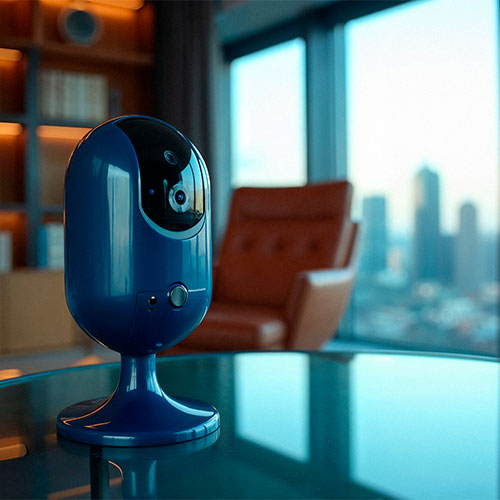
The Revolution of Focus: A Deep Dive into Smart Zoom Technology
In the visual world—whether it is smartphone photography, high-end security surveillance, or daily video conferencing—clarity is king. For years, users had to choose between bulky, expensive optical lenses or grainy, pixelated digital zoom. But a new player has entered the field to bridge this gap.
Welcome to the era of smart zoom technology.
This guide explores how this innovation is reshaping how we capture and view the world, moving beyond simple magnification to intelligent, AI-driven focus.
What is This Technology?
To understand the solution, we must understand the problem. Traditional “digital zoom” simply crops an image and stretches the pixels, resulting in a blurry mess. Optical zoom uses moving glass lenses, which preserve quality but add weight, size, and cost.
Smart zoom technology is the hybrid solution. It utilizes high-resolution sensors (often 48MP, 64MP, or higher) combined with artificial intelligence and powerful image processing algorithms. Instead of just stretching pixels, it intelligently crops into the center of a high-resolution sensor or uses AI to reconstruct details, providing a lossless or near-lossless magnified image without the need for massive telescopic lenses.
Why Smart Zoom Technology Matters
In an age where devices are getting smaller but consumer expectations for quality are getting higher, hardware alone cannot solve every problem.
This technology allows manufacturers to keep smartphones thin and security cameras discreet while still offering the ability to see distant details clearly. It is the perfect marriage of hardware (the sensor) and software (the processing), creating a user experience that feels magical.
Key Features and Mechanics
How does it actually work? There are a few different methods under the umbrella of this tech:
- Sensor Cropping: If you have a 64MP camera but output a 12MP photo, the camera can zoom in 2x or 3x simply by using the center pixels of the sensor. No stretching is required.
- AI Super-Resolution: Algorithms analyze the scene and “predict” what the missing details should look like, sharpening edges and reducing noise in real-time.
- Subject Tracking: In video, smart zoom technology can automatically identify a human subject and crop the frame to follow them as they move, keeping them perfectly centered.
Applications in Daily Life
You might be using this technology without even realizing it. It has permeated several industries:
1. Smartphones
This is the most common use case. When you pinch to zoom on a modern flagship phone, the device switches between lenses and uses computational photography to fill in the gaps. Smart zoom technology ensures that your photo of a concert stage looks crisp, even if you are standing in the back row.
2. Security and Surveillance
In the security sector, identifying a license plate or a face from a distance is critical. Old cameras produced grainy footage when zoomed in. Modern security cameras use this tech to auto-track intruders and zoom in on specific details without losing evidentiary quality.
3. Video Conferencing (Webcams)
Have you ever used a webcam that follows you around the room? That is smart zoom technology in action. It detects your face and digitally pans and zooms to keep you in the frame, making virtual presentations feel more dynamic and professional.
Benefits for Users and Businesses
- Cost Efficiency: It reduces the need for expensive mechanical parts (moving lenses), making devices cheaper to manufacture and buy.
- Compact Design: It allows for flatter camera bumps on phones and smaller security cameras that blend into the environment.
- Enhanced Usability: Features like auto-framing mean users don’t have to manually adjust their cameras during calls or streams.
Smart Zoom Technology vs. Optical and Digital Zoom
It is important to understand where this tech sits in the hierarchy of photography:
- Optical Zoom: The gold standard for quality. It uses physics (glass) to magnify. It is lossless but bulky.
- Digital Zoom: The bottom tier. It crops and enlarges, losing significant resolution.
- Smart Zoom: The middle ground. It uses excess sensor data to crop without upscaling, or AI to upscale intelligently. While a massive telephoto lens might still win in extreme distance, smart zoom technology offers 90% of the performance with 0% of the bulk.
Future Trends and AI Integration
The future of imaging is computational. As mobile processors (NPUs) become more powerful, the ability of cameras to “invent” accurate detail will improve.
We are moving toward a future where “zooming” is entirely software-defined. We will likely see smart zoom technology integrated with augmented reality (AR), allowing cameras to not only zoom in on an object but also instantly analyze and display data about it, from identifying a bird species to reading a sign in a foreign language.
Common Misconceptions
- “It’s just digital zoom.” This is false. Standard digital zoom degrades quality immediately. Smart implementations use raw sensor data before the image is processed.
- “It creates fake images.”While AI helps clean up the image, the core data usually comes from the physical sensor.
- “It works in the dark”: This is a limitation. Because it relies on cropping the sensor (using smaller pixels), smart zoom technology often requires good lighting conditions to function effectively compared to large optical lenses.
Conclusion
The way we capture images has evolved. We no longer need to carry heavy equipment to get close to the action. Through the clever use of high-megapixel sensors and artificial intelligence, we can achieve stunning clarity from compact devices.
Smart zoom technology has redefined the limits of digital imaging, proving that sometimes, software is just as powerful as hardware. Whether for capturing a family memory or securing a business, this innovation ensures we never miss the details that matter.
Is this better than optical zoom?
Not necessarily better, but more convenient. Optical zoom is still superior for extreme distances and low light, but smart zoom offers excellent quality for everyday use without the bulk.
Does smart zoom technology use more battery?
Yes, slightly. Because it requires the processor to perform complex calculations (AI upscaling or subject tracking) in real-time, it can consume more power than a standard camera mode.
Can I add this to my old camera?
Generally, no. This requires specific hardware (high-resolution sensors) and powerful processors. It is usually a feature built into new devices, not a downloadable update for old ones.
Does it work for video as well as photos?
Yes. In fact, video is where features like auto-tracking and auto-framing shine, making smart zoom technology essential for content creators and streamers.