

IP Phones Egypt: What They Cost and Whether Grandstream or Cisco Fits Your Business
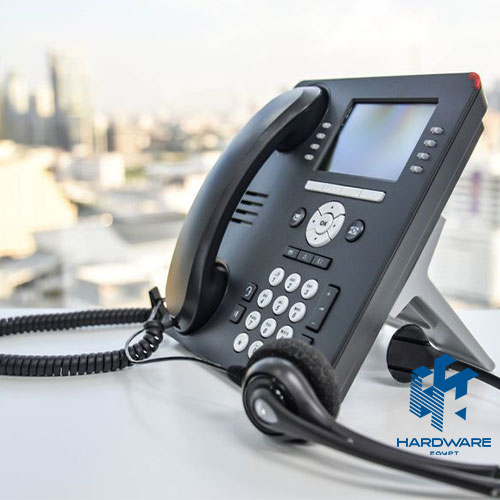
An IP phones Egypt business buys is only one part of a complete voice system. A Grandstream IP phone is often chosen for flexible SIP support and a wide range of desk-phone options, while a Cisco IP phone system is commonly considered for structured enterprise deployments and integration with Cisco call control. This guide explains phone prices, PBX requirements, network readiness, licensing, and the total cost of deploying a reliable office system.
What Is an IP Phone, and Why Do Egyptian Businesses Use Them?
An IP phone sends and receives calls over a data network using SIP (Session Initiation Protocol) instead of a traditional analog phone line. For a business, that means calls can route through the internet or a private network. Multiple extensions can share the same system. Features like call transfer, voicemail-to-email, and multi-line handling come built in rather than bolted on. Egyptian businesses adopt them mainly to consolidate phone lines across branches, cut long-distance call costs, and centrally manage extensions without running separate analog wiring to every desk.
How Much Does an IP Phone Cost in Egypt Right Now?
Entry-level desk phones like the Grandstream GRP2601 start around 2,000 to 2,900 EGP. Mid-range multi-line models such as the GXP1625 or Fanvil X3SG run 2,900 to 4,000 EGP. Android-based conference phones like the GAC2500 sit around 4,000 to 4,500 EGP. Video-capable executive phones such as the GXV3370 climb past 20,000 EGP. Cisco’s entry-level CP-7821-K9 has been priced around 3,000 EGP through Egyptian resellers. That positions it close to Grandstream’s mid-range tier, rather than undercutting it.
| Phone Tier | Example Models | Approx. Price (EGP) |
|---|---|---|
| Entry-level desk phone | Grandstream GRP2601, GXP1610 / GXP1615 |
2,000–2,900 EGP |
| Mid-range multi-line phone | Grandstream GXP1625, GRP2604P, Fanvil X3SG |
2,900–4,000 EGP |
| Conference / Android phone | Grandstream GAC2500 | 4,000–4,500 EGP |
| Video / executive phone | Grandstream GXV3370, GXV3350 |
7,000–20,500+ EGP |
| Cisco entry desk phone | Cisco CP-7821-K9 | About 3,000 EGP |
| IP PBX system (per unit) |
Grandstream UCM6202, UCM6204, UCM6301 |
Varies by capacity; quote-based |
These figures move with stock availability and currency shifts. Treat them as a planning baseline rather than a live quote, and confirm current pricing before comparing specific listings
What Actually Determines an IP Phone’s Price?
- Number of lines and SIP accounts: A basic 2-line phone costs far less than a 12 or 16-line model built for reception or executive use.
- Display and interface: A simple backlit LCD costs less than a color touchscreen or Android-based interface.
- PoE support: Built-in Power over Ethernet adds cost but removes the need for a separate power adapter at each desk.
- Video capability: Phones with a built-in camera for video calling sit at the top of the price range in both the Grandstream and Cisco lineups.
- Centralized management support: Models built for zero-touch provisioning and fleet management, common in carrier-grade lines. They cost more but scale better across many extensions.
What Makes Grandstream IP Phones a Popular Choice in Egypt?
Grandstream dominates the Egyptian IP phone market at the small-to-midsize business level. Its IP phones cover everything from a 2,000 EGP basic desk phone to a 20,000 EGP video executive model under one brand, with consistent provisioning tools across the range.
Which Grandstream Series Fits Basic Office Use?
The Grandstream GXP1610 series cover 1 to 2 SIP accounts with basic call handling, dual-switched network ports, and support for headsets. They’re aimed at reception desks and general staff extensions, rather than heavy multi-line use.
Which Grandstream Series Fits Larger or Video-Enabled Deployments?
The GRP2604P and Grandstream GXV3350 expansion modules add more programmable keys and BLF/speed-dial support for busier extensions. The GXV3350 and GXV3370 add an Android interface, built-in camera, and support for up to 16 SIP accounts. These suit executives and reception areas that need video calling alongside voice.
Is a Cisco IP Phone System Available and Worth It in Egypt?
Cisco IP phones are available in Egypt mainly through specialized enterprise resellers, rather than general electronics retailers. The lineup itself spans the 7800 series for cost-effective everyday use, up to the 8800 series for knowledge workers and managers who need a larger display and more line appearances.
What Does a Cisco IP Phone Actually Cost?
The entry-level Cisco CP-7821-K9 has been priced around 3,000 EGP through Egyptian marketplace listings, roughly matching Grandstream’s mid-range desk phones. Higher-tier 8800 series models cost more. They’re typically quoted directly by enterprise resellers rather than listed at a fixed retail price, since Cisco deployments often bundle licensing and call-control infrastructure into the total cost.
How Does Cisco Compare to Grandstream for Most Egyptian Businesses?
Cisco’s strength is deep integration with existing Cisco Unified Communications Manager or Webex Calling environments. That matters mainly to businesses already standardized on Cisco infrastructure. For a small or midsize Egyptian business starting fresh, Grandstream typically offers a lower total cost across an equivalent number of extensions. It also offers wider local stock availability and simpler standalone SIP setup that doesn’t require an existing Cisco call-control platform to unlock full functionality.
The calculation shifts for larger enterprises already running Cisco switches, routers, or a broader Cisco-based network. In that case, staying within one vendor’s ecosystem can simplify support contracts and firmware compatibility, even if the individual phone hardware costs more than an equivalent Grandstream model. The decision ultimately comes down to what’s already running in the server room, not just what looks cheaper on a single phone’s price tag.
Do You Need Individual IP Phones or a Full IP PBX System?
Buying a handful of desk phones only solves part of the picture if your business needs call routing, voicemail, and multiple extensions working together. Grandstream’s Grandstream UCM6202 IP PBX, Grandstream UCM6204 IP PBX, and UCM6301 IP PBX units support up to 500 users, with 30, 45, and 75 concurrent calls respectively. They add built-in call recording, auto-attendant, and multi-language IVR, letting you connect many Grandstream or Cisco-compatible SIP phones under one managed system.
A handful of standalone phones without a PBX behind them works fine for a very small team, where each extension just needs to make and receive calls independently. Once call transfers, shared voicemail, or an auto-attendant become necessary, the PBX becomes the more relevant purchase decision, not the phones themselves.
Sizing the PBX correctly matters as much as choosing it in the first place. The UCM6202 supports fewer concurrent calls than the UCM6204 or UCM6301. A growing team that outgrows its concurrent call capacity will hit dropped or blocked calls during busy periods, well before it runs out of physical extensions. It’s worth sizing for expected growth over the next one to two years, rather than exact current headcount, since replacing an undersized PBX later costs more than buying slightly ahead of current needs.
What Features Matter Beyond the Price Tag?
Two phones at the same price point can behave very differently in daily use. A few features matter more than the headline spec sheet suggests.
- Audio codec support: Wideband HD audio (G.722, Opus) noticeably improves call clarity over standard narrowband codecs, especially on speakerphone calls in open offices.
- Headset compatibility: EHS (Electronic Hook Switch) support for wireless headsets from Plantronics or Jabra matters for staff who spend most of the day on calls.
- Security protocols: SRTP and TLS encryption protect call content and signaling. This matters more for businesses handling sensitive client conversations than for a simple internal extension.
- Provisioning method: Zero-touch provisioning saves significant setup time once you’re deploying more than five or six phones. Each unit configures itself against a central template, rather than manual entry.
- Expansion module support: Reception and executive positions that manage many lines benefit from add-on modules with extra programmable keys rather than a phone with a fixed, limited keypad.
How Do You Actually Set Up an IP Phone System in Egypt?
The practical setup path differs depending on whether you’re deploying a handful of standalone phones or a full PBX-backed system. But the core steps stay similar.
- Confirm your internet connection has enough stable bandwidth for the expected number of concurrent calls. VoIP call quality degrades quickly under congestion.
- Choose between a hosted VoIP provider (no on-premises hardware beyond the phones) or an on-premises PBX like Grandstream’s UCM series for full local control.
- Register each SIP account or extension against the chosen platform, either manually or through zero-touch provisioning for larger deployments.
- Configure call routing, voicemail, and any auto-attendant or IVR menus needed for incoming calls.
- Test call quality, transfer, and conferencing features across a few extensions before rolling out to the full office.
Hosted setups generally get a small business running faster with less upfront hardware cost. An on-premises PBX gives more control over features and call data, at the cost of managing the hardware yourself. Businesses handling sensitive client data or regulatory requirements around call recording often lean toward on-premises for that added control. Businesses prioritizing fast setup and minimal IT overhead tend to favor a hosted platform, even if it means slightly less customization over time.
Which IP Phones Work Best for Remote or Hybrid Teams?
Remote and hybrid setups shift the calculation slightly. Not every employee needs a physical desk phone at all.
- Softphone apps: Many Grandstream and Cisco platforms support a companion softphone app. This lets remote staff make and receive calls from a laptop or phone without a physical unit.
- Portable Wi-Fi or DECT phones: For staff who split time between home and office, a cordless DECT handset paired with a base station avoids being tied to one desk.
- Cloud-hosted PBX: A cloud-based system avoids needing VPN access back to an on-premises PBX. Remote extensions work correctly without it.
For a fully remote team, physical desk phones are often the lowest priority purchase. The PBX or hosted platform choice matters far more for reliability and features than which handset brand sits on a desk that may only get used occasionally.
What Mistakes Do Businesses Make When Buying IP Phones in Egypt?
- Buying phones before confirming PBX or SIP trunk compatibility, leading to features that don’t actually work together.
- Choosing video-capable phones for staff who will never use video calling, paying for a feature that goes unused.
- Assuming every IP phone includes PoE, when some models require a separate power adapter purchased individually.
- Mixing Cisco endpoints with a non-Cisco call-control platform without checking firmware compatibility first.
- Underestimating future extensions needed, buying a PBX sized for current headcount only, with no room to grow.
What Should You Check Before Buying an IP Phone System?
☐ Confirmed how many extensions and concurrent calls the business actually needs
☐ Decided whether a standalone phone or a full PBX-backed system fits the use case
☐ Checked PoE support and switch compatibility before ordering
☐ Matched the phone tier (basic, multi-line, video) to each role, not a single model for everyone
☐ Verified local warranty and support availability for the brand chosen
☐ Compared the same configuration across at least two suppliers
Network Readiness and the Total Cost of an IP Phone System
Before buying any IP phone Egypt deployment, confirm the call platform first. The phones must be compatible with the chosen SIP service or IP PBX System, and some enterprise platforms require licenses in addition to the physical handsets. The total budget may also include SIP trunks, extensions, voicemail, call recording, support, and configuration.
The network should provide PoE power, voice VLANs, quality of service, stable internet, and enough switch capacity for every desk. Poor latency, packet loss, or jitter can damage call quality even when the handset is excellent. Review Network Solutions and network security requirements before installing a large number of phones.
A Grandstream IP phone is usually straightforward to provision in bulk through templates or device-management tools. A Cisco IP phone system may offer deeper enterprise controls, but compatibility depends on the exact firmware and call-control platform. Confirm open SIP support, provisioning method, codec support, and licensing before mixing brands.
For call centers, evaluate headset ports, electronic hook switch support, programmable keys, supervisor features, and comfort during long shifts. The Call Center Headsets category should be planned with the phones rather than added after deployment.
Security matters as much as audio quality. Change default passwords, restrict management access, update firmware, encrypt signaling and media where supported, and separate voice devices from general user traffic. Redundancy for the PBX, internet link, and power should be considered when phone downtime would stop business operations.
You can also get Grandstream IP Phones in Egypt, access points, Network Security, Switches, conference cameras, and Networking.
What’s the Bottom Line on IP Phones in Egypt?
An IP phone’s price in Egypt tracks its tier and feature set far more than the brand alone. Basic desk phones, multi-line models, and video-capable executive phones each solve a different problem at a different cost. Grandstream covers that full range under one brand with strong local availability. Cisco fits mainly where a business is already standardized on Cisco’s call-control ecosystem. Match the phone tier and PBX needs to your actual headcount and call volume before comparing specific models. Treat the PBX or hosted platform decision as equally important as the handset itself, since the phones only perform as well as the system routing calls behind them. Anyone comparing ip phone Egypt options should weigh the PBX decision just as heavily as the handset brand.
Browse the full IP phone range at Hardware Egypt, including Grandstream desk phones and UCM IP PBX systems, for verified pricing and setup support.
Frequently Asked Questions
What is the average IP phone price in Egypt?
Most business desk phones range from 2,000 to 4,500 EGP. Video-capable and executive models cost significantly more, often exceeding 7,000 EGP.
Is Grandstream a good IP phone brand for small businesses in Egypt?
Yes. Grandstream covers the full range from basic desk phones to full IP PBX systems under one brand. It offers wide local stock availability and straightforward standalone SIP setup that doesn’t require existing enterprise infrastructure.
Can I use a Cisco IP phone without a full Cisco phone system?
Some Cisco models support third-party SIP platforms. But many are optimized for, or require, Cisco Unified Communications Manager or Webex Calling to unlock full functionality. Check the specific model’s compatibility before buying.
Do I need an IP PBX if I only have a few employees?
Not necessarily. A very small team can often run standalone SIP phones through a hosted VoIP provider without an on-premises PBX. But call transfers, shared voicemail, and auto-attendant features generally require one.
What's the difference between Grandstream's GXP and GRP series?
The GXP series is Grandstream’s established carrier-grade lineup. GRP is a newer series built around zero-touch provisioning, for easier bulk deployment and centralized management across many extensions.